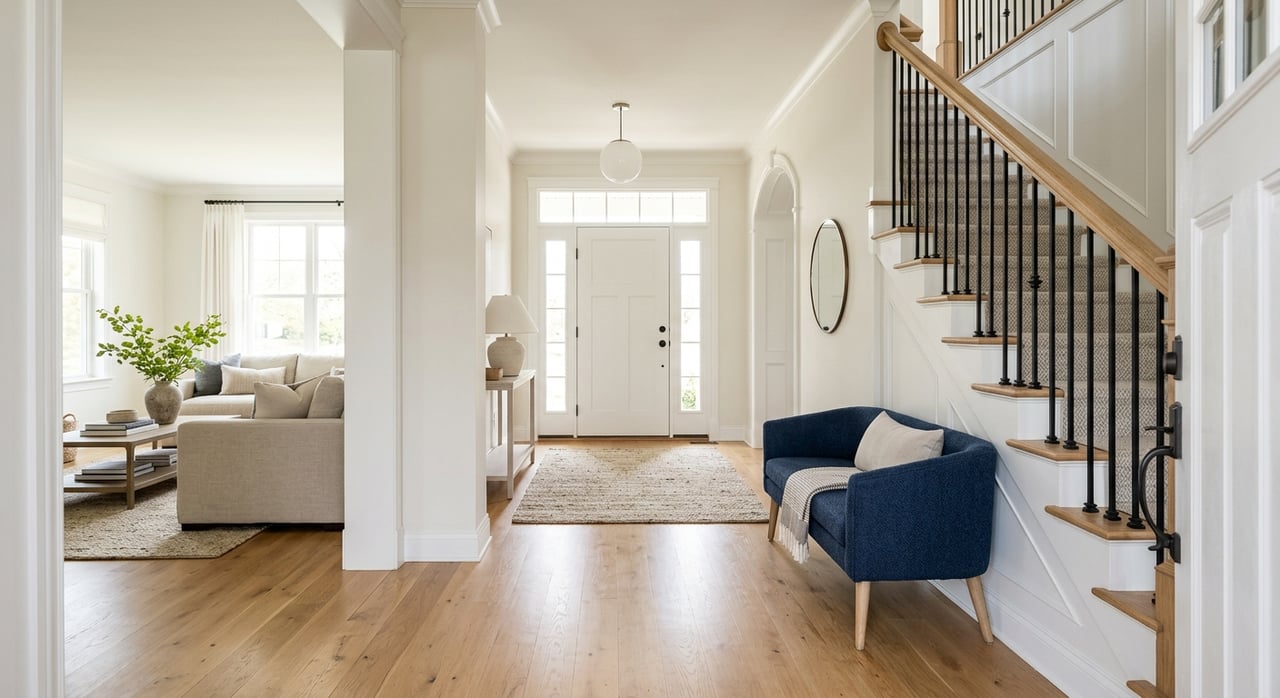
Step-by-Step Guide for First-Time Homebuyers in Howell MI
April 16, 2026
April 16, 2026
Buying your first home in Howell can feel exciting and overwhelming at the same time. You may be wondering how much home you can afford, how fast listings move, and what steps actually matter most before you sign on the dotted line. The good news is that with the right plan, you can move through the process with more confidence and fewer surprises. Let’s walk through it step by step.
Howell offers a different feel than many surrounding areas in Livingston County. According to the U.S. Census Bureau’s Howell city profile, the city has about 9,914 residents, while Livingston County has nearly 197,000. That smaller-city setting, along with Howell’s historic downtown and established neighborhoods, can be appealing if you want a community with character and a range of housing options.
Howell is also well-positioned for commuting. The city’s community brochure says Howell is about a half-hour from Lansing and Ann Arbor and less than an hour from downtown Detroit. Local planning documents also note that I-96 and US-23 connect Howell to Lansing, Ann Arbor, Flint, and Metro Detroit, which can make location and drive time a key part of your home search.
One of the biggest mistakes first-time buyers make is assuming every market looks the same. Howell does not. The city’s 2023-2028 master plan shows that 39% of housing types are single-family detached, while more than half of housing units are in structures with two or more apartments per structure.
That matters because your choices may include detached homes, condos, and other attached or multifamily-style properties. If you start your search expecting only suburban-style single-family homes, you could overlook options that better fit your budget, maintenance preferences, or commute.
Howell’s housing stock is also older than many buyers expect. The city’s master plan says 57% of units were built before 1980 and nearly 87% before 2000. For you, that means condition matters just as much as price.
Before you tour homes seriously, get preapproved. The Consumer Financial Protection Bureau says lenders look at your income, assets, employment status, savings, and monthly debt when deciding whether to lend.
A preapproval helps you understand your real budget, not just your best guess. It also helps you move faster when you find a home you like, especially since recent market data suggests many Howell homes move in about a month rather than sitting for long stretches.
Just as important, shop around. The CFPB’s mortgage shopping guide recommends comparing at least three preapprovals or quotes so you can evaluate interest rates, fees, and loan terms.
Your down payment is only part of the story. The CFPB says closing costs typically range from 2% to 5% of the home price, and that amount is separate from your down payment.
You should also plan for prepaid taxes and insurance, plus out-of-pocket costs like inspections. If your down payment is below 20%, the CFPB notes that mortgage insurance is typically required. Knowing these costs upfront can help you avoid stretching too far.
A simple first-time buyer budget should include:
If saving for upfront costs feels like the hardest part, you may have options. Michigan buyers may want to look at the MSHDA MI 10K DPA Loan, which offers up to $10,000 for down payment, closing costs, and prepaid expenses when paired with an MSHDA MI Home Loan.
There is also the MSHDA First-Generation DPA pilot, which offers up to $25,000 for qualified buyers. This program includes income limits, a minimum credit score of 640, and homebuyer education requirements.
These programs can make a meaningful difference, but they do come with rules. If you think you may qualify, it helps to explore them early so your financing plan is clear before you start making offers.
You do not have to assume Howell is either ice-cold or ultra-competitive. Recent data points to a market that is more balanced than frantic. Redfin’s January 2026 market data reported a median sale price of $307,000, while other current trackers in the research show homes often move in roughly 31 days and close near 98% of list price.
For you, the takeaway is simple. You may have time to make thoughtful decisions, but you still need to be prepared when a well-priced property hits the market. That is especially true in a built-out city like Howell, where large amounts of new housing supply are limited.
When you start touring homes, focus on the features that matter most in this local market. Because Howell has a mix of housing types and older housing stock, your checklist should go beyond paint colors and countertops.
As you tour, pay close attention to:
This step is where local guidance matters. A home that looks affordable at first glance may need updates that change the true monthly cost of ownership.
Once you find the right home, your offer should balance competitiveness with protection. For first-time buyers, one of the most important protections is the inspection contingency.
The CFPB says you should not buy a home without having it thoroughly inspected. It also recommends scheduling the inspection as soon as possible and attending if you can. That advice is especially important in Howell, where many homes were built decades ago.
An inspection can help you learn about the roof, mechanical systems, foundation, windows, and other major components. Even if you still want the home, the inspection gives you clearer information before you move forward.
After your offer is accepted, the process becomes more detail-heavy. This is the stage where many first-time buyers feel pressure to just keep signing, but careful review matters.
The CFPB says your lender must provide a Closing Disclosure at least three business days before closing. You should compare that document to your earlier Loan Estimate and make sure the numbers, terms, and cash needed at closing match your expectations.
Closing also usually involves homeowners insurance and title insurance. If something looks different than expected, ask questions before closing day, not at the closing table.
Closing is exciting, but it is also the point where the mortgage becomes a legal commitment. The CFPB’s closing guidance reminds buyers to understand the final payment, escrow setup, and signed loan documents.
Before closing day, make sure you know:
That final review can make your move-in feel much smoother.
A clear plan helps, but it also helps to know what can go wrong. Many first-time buyers run into trouble when they focus only on the listing price and forget the bigger picture.
Try to avoid these common mistakes:
The more informed you are on the front end, the better your decisions tend to be during negotiations and closing.
Buying your first home in Howell is not about rushing. It is about understanding your budget, learning the local market, and making informed choices at each step. With Howell’s mix of older homes, condos, and detached properties, plus its convenient access to major Southeast Michigan job centers, a thoughtful strategy can help you find the right fit and avoid costly surprises.
If you want step-by-step guidance from a local agent who values clear communication and detailed support, connect with Sherry Cynowa. She can help you navigate the Howell market with confidence from your first showing to closing day.
Stay up to date on the latest real estate trends.

Veteran Michigan Real Estate Agent since 1994, Sherry is “short in stature and tall on results,” bringing local expertise and a passion for helping you achieve your real estate goals.