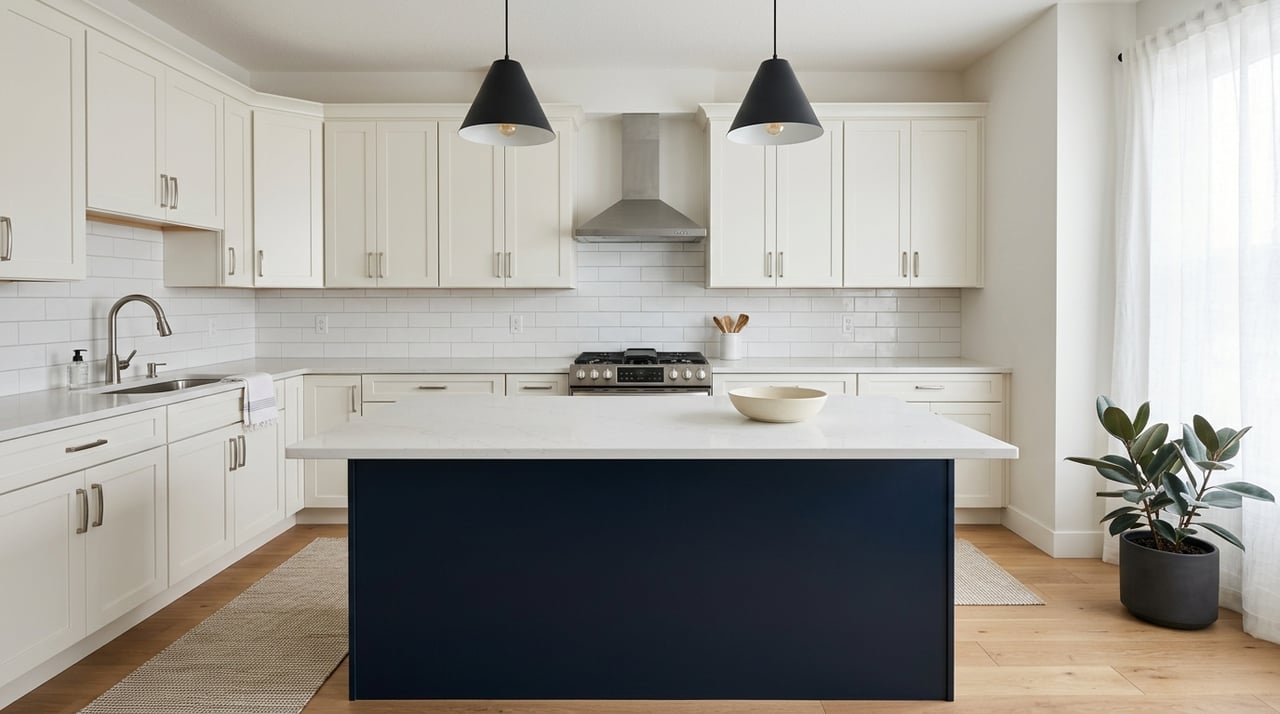
Brighton MI Housing Market Trends & Timing Right Now
April 2, 2026
April 2, 2026
If you are trying to buy or sell in Brighton right now, you are probably asking the same question everyone else is asking: is this a hot market, or is it starting to cool off? The short answer is that Brighton still leans in sellers’ favor, but it is not a one-speed market. If you understand the numbers, the pace, and the differences between areas like 48116 and 48114, you can make smarter decisions and avoid costly assumptions. Let’s dive in.
Brighton is best described as a seller-leaning market that is still fairly balanced in spots. Public data points to steady demand, reasonable activity, and enough inventory to give buyers some options without flooding the market.
Redfin’s Brighton housing market data calls the city somewhat competitive. Realtor.com’s Brighton market page labels it a seller’s market, while Zillow’s Brighton home values page shows homes going pending in about 23 days. Together, those signals suggest a market that still moves, but not at a breakneck pace.
One important note: these sites do not measure the market in exactly the same way. Redfin leans on MLS and public-record sales data, Zillow uses a modeled home-value index, and Realtor.com focuses on active listings and market speed indicators. That is why you may see different price and inventory numbers depending on the source.
If you only read one headline, Brighton may look very straightforward. In reality, the numbers show a market that is holding value overall, but with some month-to-month softness in certain metrics.
According to Realtor.com’s Brighton data, the median listing price is $397,500, with 153 homes for sale and a median price per square foot of $225. Year over year, the site reports that for-sale inventory is up 25%, median sale price is up 9.07%, and median days on market are up 30.56%, while price per square foot is down 7.79%.
Month over month, Realtor.com shows the median listing price slipping 0.63% and the price per square foot slipping 1.75%. That does not point to a dramatic market shift, but it does suggest that pricing still matters and sellers cannot assume every home will command a premium just because inventory is limited.
Redfin’s closed-sale data paints a slightly different picture. It shows a February 2026 median sale price of $299,000, up 1.4% year over year, with 11 homes sold and a median of 66 days on market. Because that monthly sales count is small, short-term swings can look larger than they really are, so it is wise not to overreact to one data point.
Zillow adds another layer. Zillow’s Brighton figures show a typical home value of $424,892, up 3.2% year over year, along with 93 homes for sale, 29 new listings, and a median list price of $419,150. The big takeaway is simple: values are still holding up, but momentum looks measured rather than explosive.
Inventory affects everything from negotiating power to how quickly you need to make a decision. Brighton has homes on the market, but not so many that buyers can afford to move slowly on every good listing.
Public counts vary by source. Zillow reports 93 homes for sale in Brighton, while Realtor.com reports 153. Even with that difference, both sources support the same basic conclusion: there is supply, but not an oversupply.
That matters because a market with moderate inventory often creates a split experience. Well-prepared, well-priced homes can still draw quick attention, while overpriced or less polished listings may take longer to move.
If you are buying in Brighton, this is not the kind of market where you want to jump blindly or drag your feet. You need to be ready to act when the right home appears, but you also need to stay grounded in the numbers.
Redfin reports that some homes get multiple offers, hot homes can sell for about 1% above list price and go pending in around 20 days, and the average home sells for about 1% below list price. Realtor.com also reports that Brighton homes sold for about 2.1% below asking on average in February 2026.
That mix is actually helpful for buyers. It tells you there may be room to negotiate on some homes, but deep discounts are not the norm for listings that are priced well and show well. In other words, you may not need to overpay, but you do need to be realistic.
Timing matters too. Zillow’s estimate of about 23 days to pending, along with ZIP-level days on market of 31 and 54 days in different parts of Brighton, shows that the market still rewards preparation. If you are financing your purchase, affordability remains a major factor, especially with Freddie Mac reporting 30-year fixed mortgage rates at 6.11% on March 12, 2026, and 6.38% on March 26, 2026.
If you are selling in Brighton, the current market still gives you a solid opportunity. The data supports competitive pricing and healthy demand, but not automatic bidding wars across the board.
Realtor.com’s Brighton market page shows sale-to-list ratios near full price rather than far above it. That is an important distinction. Buyers are still active, but they are paying closer attention to value, especially when mortgage rates are higher than the ultra-low-rate years many people remember.
For sellers, that means preparation and pricing strategy matter more than ever. A home that is clean, well presented, and priced close to market can still attract strong attention. A home that reaches too high on price may sit longer, especially as buyers compare more options.
One of the biggest mistakes buyers and sellers make is treating Brighton like one uniform market. The data shows that different parts of Brighton can move at different speeds and price points.
In ZIP code 48116, Realtor.com shows 87 homes for sale, a median list price of $389,900, and 31 median days on market, with a 99% sale-to-list ratio. In 48114, there are 65 homes for sale, a median list price of $529,000, and 54 median days on market, with a 98% sale-to-list ratio.
In practical terms, 48116 appears lower-priced and faster-moving than 48114. That is why your strategy should be tied to the specific home and ZIP code, not just broad citywide headlines.
If you are buying, ZIP-level trends can shape how aggressively you offer and how quickly you need to move. If you are selling, those same trends can influence your pricing window, showing activity, and expected days on market.
This is also where local guidance becomes especially valuable. Two homes with similar square footage can perform very differently depending on location, updates, and nearby competition.
Brighton does not exist in a vacuum, so it helps to look at the broader county picture too. Realtor.com’s Livingston County market data shows 819 homes for sale, a median home price of $399,900, a median of 38 days on market, and a 99% sale-to-list ratio.
That countywide snapshot supports the same overall conclusion seen in Brighton itself. The market remains competitive and seller-leaning, but it is more measured than the most intense housing periods of the past several years.
For both buyers and sellers, that can actually be good news. A measured market often creates more room for thoughtful decision-making, better negotiation, and fewer extreme swings.
If you are buying, this market rewards preparation, fast decision-making, and a clear understanding of what matters most to you. If you are selling, it rewards realistic pricing, strong presentation, and a plan that fits your exact property and location.
Brighton still offers meaningful opportunity on both sides of the transaction, but the details matter. Citywide trends are useful, yet the most accurate strategy usually comes from looking closely at your price point, ZIP code, timing, and goals.
If you want guidance that is local, detail-focused, and easy to understand, connect with Sherry Cynowa. She brings years of Brighton-area experience and a clear, client-first approach to help you buy or sell with confidence.
Stay up to date on the latest real estate trends.

Veteran Michigan Real Estate Agent since 1994, Sherry is “short in stature and tall on results,” bringing local expertise and a passion for helping you achieve your real estate goals.