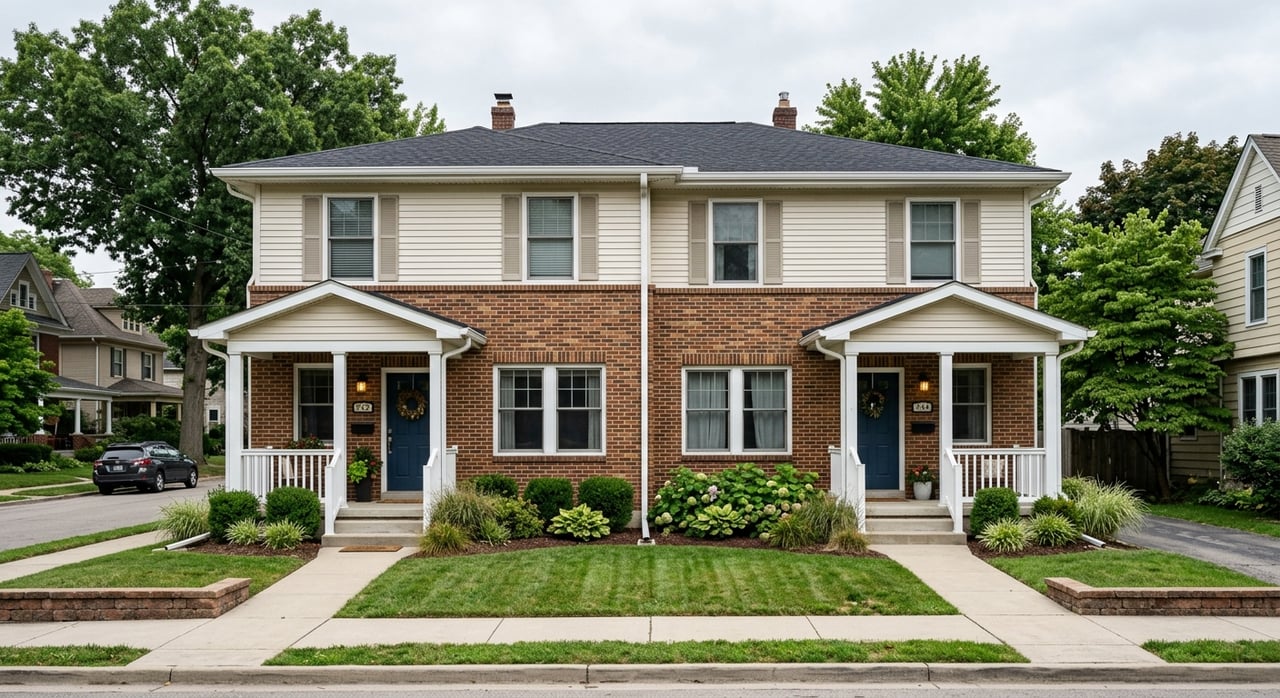
Is a Fenton MI Investment Property Worth It?
May 14, 2026
May 14, 2026
Thinking about buying a rental in Fenton? It is easy to see the appeal. Fenton offers a smaller-market feel with access to major highways and reach to Ann Arbor, Flint, Lansing, and Detroit within about an hour. But if you want an investment property that truly works on paper, you need more than a good location story. You need a careful look at rent levels, zoning, taxes, and local inspection rules. Let’s dive in.
Fenton is a small city in Genesee County with a population of 11,882 as of July 1, 2024, and just 6.65 square miles of land area. That smaller footprint matters because it is not a huge rental market where every property type performs the same way. In a market like this, details drive the result.
The city also promotes convenient access to U.S. 23 from three points. For many buyers, that makes Fenton easier to consider as a long-term hold market because regional access can support broad appeal for future tenants and future resale.
Public data paints Fenton as a middle-ground market between Genesee County and nearby Livingston County. Fenton’s owner-occupied housing rate is 63.1%, compared with 70.7% in Genesee County and 86.9% in Livingston County. That mix suggests there is a meaningful rental presence, but not a massive one.
Income and rent data also matter when you are screening a deal. Fenton’s median household income is $80,000. Its median gross rent is $1,275, which is close to Livingston County’s $1,287 and higher than Genesee County’s $989.
A basic affordability check shows Fenton’s median gross rent equals about 19.1% of median monthly household income. That does not promise strong cash flow on a specific property, but it does help you compare rent potential with local income in a simple, public-data way.
If you are looking for a market where you can buy almost anything and assume it will rent well, Fenton may not be the right fit. This is a smaller suburban market where purchase price, tax exposure, condition, and unit type all carry extra weight.
That is why disciplined underwriting matters here. Fenton can support rental opportunities, but it rewards investors who screen carefully instead of relying on broad county averages or best-case assumptions.
The city describes its housing mix as including single-family homes, apartment communities, and condominiums. For investors, that means the most realistic opportunities may include:
That range can be a plus because it gives you more than one path into the market. Still, the right property type depends on the parcel, your budget, and your plan for holding or improving the property.
One of the biggest mistakes investors make is assuming a use is allowed just because a property looks like it should work. In Fenton, zoning is a parcel-by-parcel issue.
The city’s zoning ordinance allows single-family detached homes, single-family attached homes, duplexes, and multiple-family dwellings in certain Medium-High Density Residential and High Density Residential districts. The Planned Unit Development overlay may also allow attached dwellings, townhouses, apartment buildings, zero-lot-line layouts, and similar formats.
That does not mean those uses are allowed everywhere in the city. If you are considering a duplex, a conversion, or a small multifamily play, your first step should be checking the zoning map and ordinance for that specific parcel.
If your strategy includes rehabbing or changing how a property is used, building code review becomes important. Fenton’s building code references detached one- and two-family dwellings, along with townhouses up to three stories with separate means of egress.
In plain English, that means you should not assume an existing layout is ready to rent as-is. Before you build your numbers around a conversion or added unit, make sure the structure and code requirements support your plan.
A smart investment review in Fenton should start with public data before you get too far into the deal. This can help you rule out weak opportunities early and focus your time on properties with a better chance of working.
Here is a simple screening workflow based on public resources.
Start by verifying zoning for the exact parcel. This is especially important if the property is a duplex, a condo with rental questions, a mixed layout, or a possible multifamily conversion.
If the use is not clearly supported, the deal may not deserve more time until that issue is resolved.
Michigan property taxes can shift meaningfully after a transfer. That is why relying on the seller’s current tax bill can lead to bad projections.
The State of Michigan’s Property Tax Estimator is a practical tool for estimating taxes and comparing millage rates. Fenton’s tax resources also matter because the city notes that taxes are levied July 1 and December 1, while utility bills are issued quarterly.
County records can help you understand sale history and ownership patterns before you write an offer. In Genesee County, Fenton City parcels are identified with the code 53.
The county’s historical records process also allows deed and mortgage index research by year, type, and party name. That can be useful when you want more context on a property’s chain of ownership.
For a quick rent benchmark, compare the property’s projected rent against public rent data. HUD’s FY2026 Fair Market Rent schedule lists the Flint MSA, which includes Genesee County, at $856 for a one-bedroom and $1,033 for a two-bedroom.
For Livingston County, the FY2026 figures are $1,264 for a one-bedroom and $1,457 for a two-bedroom. These are not the same as true market rent for every property, but they can give you a useful frame of reference when screening a deal.
In Michigan, taxes deserve special attention because they can materially affect your return after closing. Fenton investors should treat taxes as a major underwriting line item, not an afterthought.
Genesee County’s 2024 annual financial reporting says property is reassessed annually and assessed at about 50% of actual value. That is one more reason not to assume the seller’s current tax bill reflects your future ownership cost.
You should also know that Michigan requires a Property Transfer Affidavit to be filed with the local assessor within 45 days of transfer. That filing is part of the post-closing process and should be on your checklist.
If you are buying a true rental property, do not underwrite the deal as if it will receive owner-occupied tax treatment. Michigan Treasury’s guidance says the principal residence exemption applies when the property is occupied as the owner’s principal residence and claimed by affidavit.
For most investors, that means a pure rental property generally will not qualify. Your numbers should reflect that reality from the start.
Fenton is a rule-conscious market when it comes to rental operations. The city’s code enforcement division performs rental housing inspections and existing building inspections to help ensure compliance with property maintenance standards.
That matters because your operating plan needs to cover more than mortgage, taxes, and insurance. It also needs to account for inspection readiness and turnover work.
Fenton’s rental inspection guidelines call for:
Those are practical items, but they can affect both timeline and cost. If you live out of the area or plan to hold multiple units, strong self-management or a local property manager may make the property easier to operate.
If you plan to lease a property in Fenton, Michigan’s landlord-tenant rules should be part of your setup process. According to the Michigan Attorney General, residential landlords must deposit security deposits in a regulated financial institution or use a landlord-tenant security deposit bond and follow annual certification requirements.
That is not a minor detail. It is a core compliance item, and it should be handled correctly from day one.
If you are evaluating Fenton for a buy-and-hold strategy, it helps to think beyond the first year of rent. Long-term performance often comes down to how well you plan for taxes, repairs, and capital improvements.
For example, major replacements like a roof or furnace are generally capitalized and depreciated rather than deducted all at once under IRS Publication 527. The same publication also notes that residential rental property is generally depreciated over 27.5 years.
You do not need to become a tax expert before buying, but you do want your investment plan to reflect the difference between routine expenses and major capital items. That long-view mindset can help you avoid surprises later.
Fenton can make sense if you want a smaller suburban market with a mix of single-family homes, condos, duplex possibilities, and some small multifamily opportunities. Its rent levels sit above broader Genesee County figures, and its location offers good regional access.
At the same time, this is not a market where you should make broad assumptions. Zoning, tax reset risk, inspection standards, and property condition all need to support the deal.
If you are patient and numbers-driven, Fenton may be worth a close look. The best opportunities here tend to come from careful screening, realistic tax estimates, and a clear plan for compliance and ongoing management.
If you want help evaluating whether a Fenton property fits your goals, connect with Sherry Cynowa for clear, local guidance backed by decades of Southeast Michigan real estate experience.
Stay up to date on the latest real estate trends.


Veteran Michigan Real Estate Agent since 1994, Sherry is “short in stature and tall on results,” bringing local expertise and a passion for helping you achieve your real estate goals.