Milford MI Neighborhoods: Village, Suburban, or Rural?
June 4, 2026
June 4, 2026
If you have been looking at Milford and wondering whether it feels more like a small historic village, a suburban neighborhood hub, or a place to find extra land and privacy, the answer is yes. Milford packs several different housing experiences into one area, and that can make your search feel exciting and a little confusing at the same time. This guide will help you understand how Milford is laid out, what kinds of homes you will typically find, and how current price ranges differ from one area to the next. Let’s dive in.
Milford is not one single, uniform housing market. The Village of Milford has 6,520 residents within 2.45 square miles, while Milford Charter Township has 18,008 residents across 33.04 square miles. That difference in scale helps explain why you can go from a walkable historic street to a newer subdivision or a large-lot property in just a short drive.
Housing values also reflect that split. Census data shows a median owner-occupied home value of $363,700 in the village and $425,400 in the township. Current market data points in the same direction, with reported figures showing notable variation between sale prices, list prices, and broader home value estimates.
For buyers, that means Milford is best understood as a group of housing settings rather than one price point. For sellers, it means pricing strategy depends heavily on exactly where your home sits and how it compares to nearby properties.
Downtown Milford is known for its traditional village layout, local shops, restaurants, green space, and public events. The local downtown development authority highlights community staples like the farmers' market, Friday Nights at the Fountain, and Bike Fest & Trail Challenge. If you want a setting where errands, dining, and events feel close at hand, this part of Milford stands out.
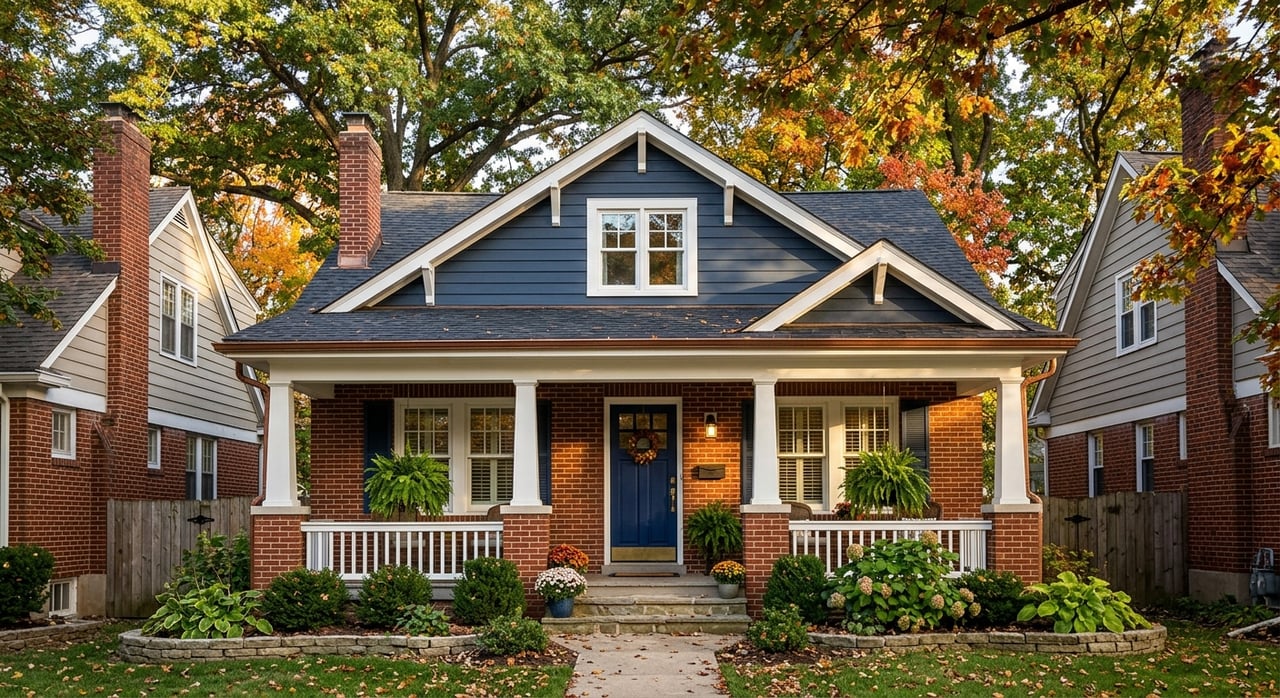
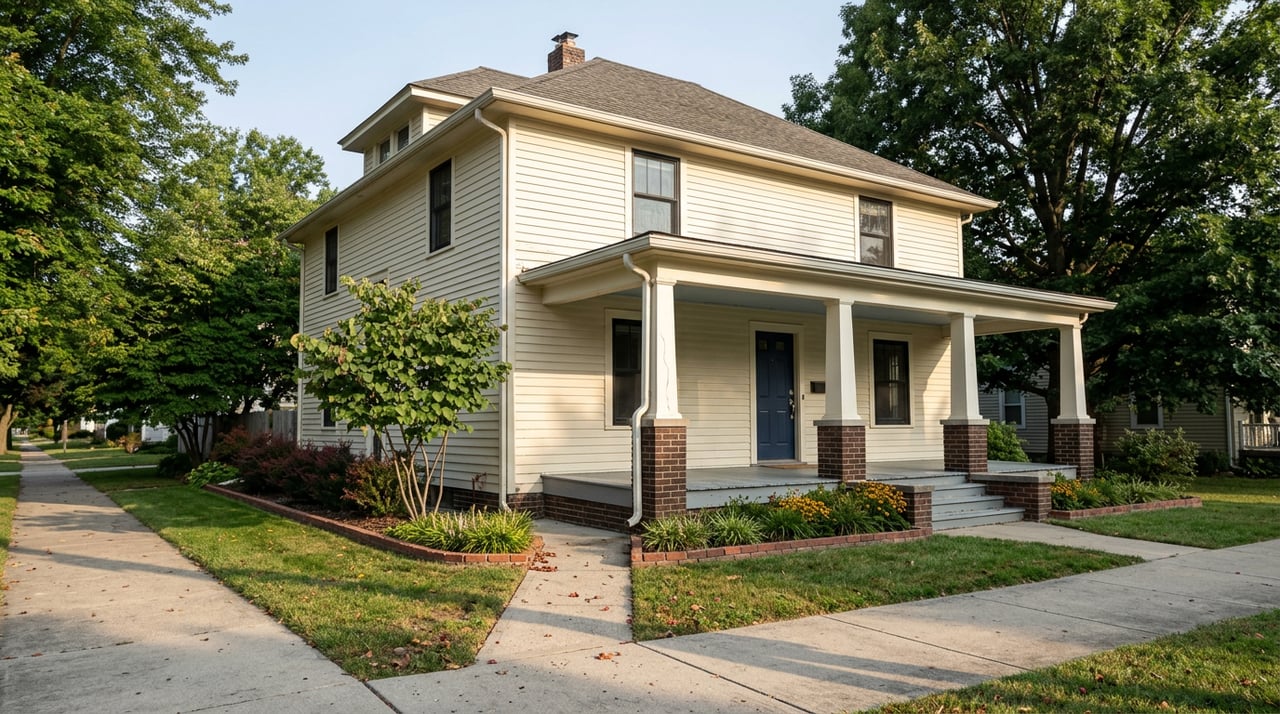
The village center also carries much of Milford’s oldest housing stock. Planning documents describe a traditional downtown with pedestrian-oriented design, while local historic references note architectural styles from the 1830s through 1950. You may see everything from Greek Revival and Italianate homes to Queen Anne, Bungalow/Craftsman, Tudor Revival, Dutch Colonial Revival, and Cape Cod styles.
In the village core, housing can include attached homes, townhomes, condos, and older detached houses closer to downtown streets. This is often the best fit for buyers who value character, lower-maintenance options, or a location near the heart of Milford’s event and retail activity.
Recent examples show just how broad this segment can be. Townhouse and condo sales on Village Lane have landed in the low $200,000s, while an in-town home on East Commerce Street sold for $475,000. A practical current range for the village core is roughly the low $200,000s to the mid $400,000s, with some larger or more distinctive historic homes reaching above that.
The village core can appeal to a few different types of buyers:
If you are comparing Milford to more suburban communities, this part of town often feels the most unique and layered.
Just outside downtown, Milford shifts into a more traditional suburban pattern. Here, you are more likely to find ranches, colonials, detached condos, garages, larger floor plans, and subdivision-style street layouts. Many of these neighborhoods are still only minutes from the village center, so you can enjoy easier access to downtown without living directly in the historic core.
This is often the sweet spot for buyers who want more interior space and a neighborhood setting while keeping Milford’s village amenities nearby. It can also be a practical option for move-up buyers and downsizers who want a modern layout or a main-floor living setup.
Current neighborhood-level value data shows a wide spread across Milford’s close-in communities. Reported figures place SMB Estates at $345,075, Coventry Gardens at $355,515, Northbury at $378,031, Woodbury Park at $498,771, Willow Woods at $520,263, Orchard Hills at $522,072, and Traver at $606,723.
That suggests a broad bracket that starts in the mid $300,000s and rises into the low to mid $500,000s, with some premium pockets around $600,000. Recent examples support that range. In Ridge Valley of Milford, a four-bedroom colonial at 417 Napa Valley sold for $495,000, and ranch listings in Milford were showing a median list price of $445,000. Eagle Ridge, a detached condo community near downtown, has also seen pricing around $480,000.
In these neighborhoods, you will usually see features like:
If you want Milford character but prefer a more conventional neighborhood feel, this category often offers the best balance.
Outside the closer-in neighborhoods, parts of Milford Township take on a more private, pastoral feel. The township master plan preserves a Rural Residential category for large-parcel single-family development with a minimum density of about 0.33 dwelling units per acre. In practical terms, that points to a pattern of much larger home sites, often around three acres.
This segment is less about neighborhood density and more about land, privacy, and flexibility. You may see mature woods, long driveways, custom homes, pole barns, or room for hobby-oriented use depending on the property.
Recent examples show how wide this category can be. A custom ranch on 10 wooded acres at 13458 Buno Road sold for $648,809. A custom Georgian Garrison Colonial on more than three wooded acres at 2190 Mac Farm Circle sold for $995,000, and a new ranch on a 1.5-acre homesite at 2776 Verona Way was listed at $1.195 million.
Another example, 2300 Old Plank Road, reflects the farmhouse-and-outbuilding style that some buyers specifically seek in this part of the township. A reasonable current range for rural-feeling Milford properties is roughly the upper $600,000s to $1.2 million and up, though some smaller or older homes may fall below that range.
These properties can be a strong match if you want:
This part of Milford tends to appeal to buyers who prioritize land and breathing room over walkability.
If Milford is on your shortlist, the best first step is to decide how you want daily life to feel. If you want a walkable setting with shops, events, and older homes full of character, focus on the village core. If you want a more typical suburban neighborhood with easy downtown access, start with the close-in subdivisions.
If your priority is land, privacy, and a property that feels more tucked away, the township’s rural-feeling areas deserve a closer look. In many cases, buyers are not choosing between better and worse options. They are choosing between very different lifestyles within the same Milford address.
One reason Milford can be tricky to read online is that different market metrics measure different things. Redfin reported a March 2026 median sale price of $360,000 for Milford, while Zillow’s April 30, 2026 Milford data showed a typical home value of $486,459 and a median list price of $538,300.
Those numbers are not direct substitutes for each other. Sale price reflects closed transactions, list price reflects seller expectations, and a home value index measures something different again. What they do show, taken together, is that Milford has real variation by location, property type, and setting.
That is why it helps to evaluate Milford in segments instead of treating it like one flat market. A historic condo near downtown, a colonial in a subdivision, and a custom home on acreage may all share a Milford mailing address while competing in very different price ranges.
Milford’s appeal comes from variety. You can find historic village charm, neighborhood convenience, and rural privacy all within the same broader community. That range gives you more ways to match a home to your budget, your lifestyle, and the kind of setting you want day to day.
If you want help sorting through Milford’s different housing pockets, comparing home styles, or figuring out which part of the market best fits your goals, Sherry Cynowa can guide you through the process with clear communication and experienced local insight.
Stay up to date on the latest real estate trends.

Veteran Michigan Real Estate Agent since 1994, Sherry is “short in stature and tall on results,” bringing local expertise and a passion for helping you achieve your real estate goals.