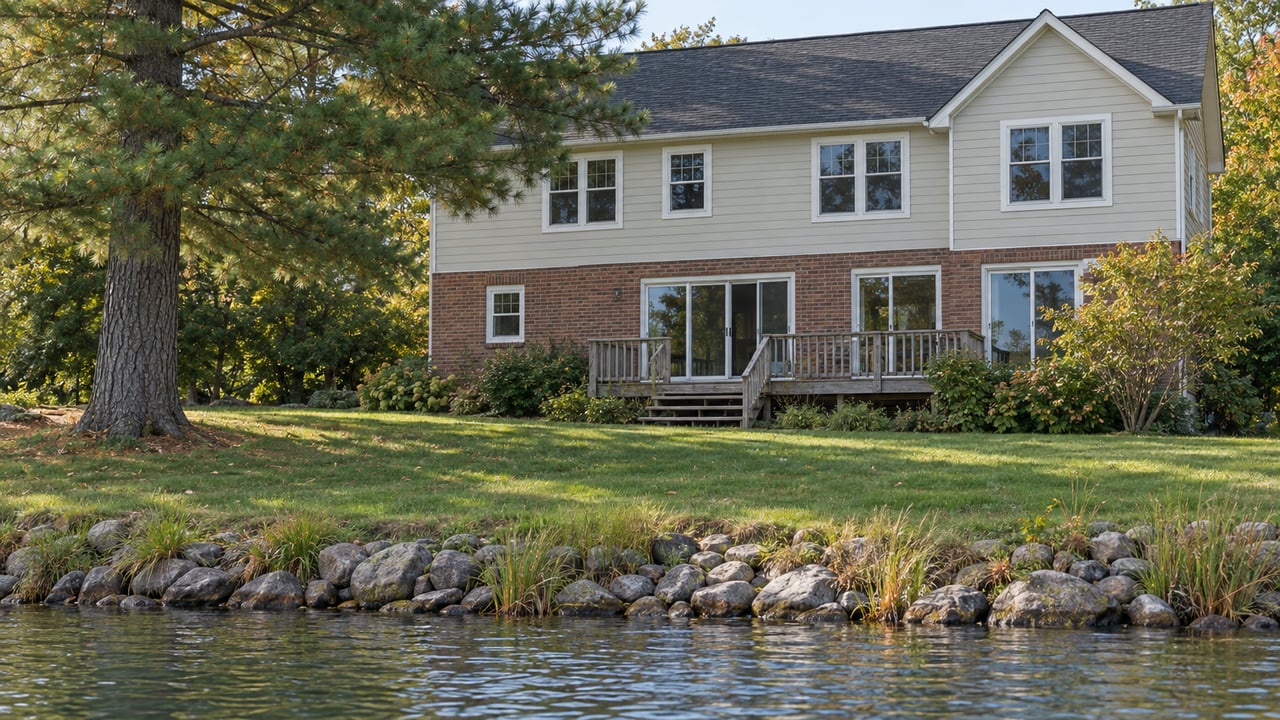
What a Fenton Lakefront Price Doesn't Include
October 1, 2026
October 1, 2026
Two waterfront listings on two different Fenton lakes, priced within a few thousand dollars of each other, can carry entirely different ongoing costs once the deal closes. Not in the mortgage. Not in the insurance quote. In a separate line on the property tax bill that has nothing to do with either home's sale price.
On Lake Fenton, that line currently funds an invasive weed treatment program run through the Lake Fenton Property Owners Association, and it costs about $56 a year per riparian lot. A few miles away on Loon Lake, a lake improvement special assessment approved by the Fenton Township board in 2024 set the first-year cost at $429.17 per share, dropping to $412.50 a year for the remaining four years of the term. Same township, same general market, and a cost difference of roughly seven times that shows up whether the home behind it sold for $350,000 or $1.2 million.
That's the part of buying on a Fenton lake a listing sheet won't show. It's worth understanding before two waterfront properties get compared on price alone.
Lake Fenton itself is 845 acres, the largest lake in Genesee County, with full all-sports privileges that cover waterskiing, tubing, wakeboarding, and jet skis. It has its own sailing club that races Sunday afternoons off the north end, and its own private island, Case's Island, where 35 boat-access cottages sit with no road connection at all.
Within that setting, waterfront pricing tends to split into tiers rather than one number. Canal-access cottages, which get lake privileges without open-water frontage, typically start in the $400,000 to $700,000 range. Homes with direct, updated frontage generally run $700,000 to $1.2 million. Premium estates on the north shore or other prime stretches can reach $2.5 million or more. The broader non-waterfront housing stock across Fenton trades at a fraction of any of those tiers.
That spread is the visible part of the market, the number a buyer sees before ever touring a home. What it doesn't show is what happens after closing, when the parcel's specific tax detail reveals whether it sits inside an active special assessment district, and if so, which one.
Michigan funds most lake improvement work, weed control, dredging, channel maintenance, through a mechanism called a special assessment district, created by a township board under the Township Special Assessment Act, Public Act 188 of 1954. The process requires two separate public hearings: one on whether the project is worth doing, and a second on the actual assessment roll once costs are estimated. The district itself is drawn around the parcels judged to benefit from the work, which usually means lakefront lots and any back lots with deeded or dedicated access.
Once a district is confirmed, the cost is divided by parcel or by share, not by the home's appraised value. A $1.2 million estate and a $450,000 cottage on the same channel can owe the identical per-share number, because the assessment is priced against the project and the benefit received, not against what either house is worth.
This is also a different pool of money than what a lake association collects on its own. The Lake Fenton Property Owners Association is explicit about that distinction: it runs on voluntary membership dues for most of its programs, while the weed treatment cost is a mandatory line the township adds to the tax bill through the special assessment district. A buyer could join or skip the voluntary association entirely and still owe the mandatory assessment, because those are two separate obligations attached to the parcel.
Fenton Township is dotted with small lakes beyond Lake Fenton itself, and nearly every one of them has run its own improvement district at some point. The per-parcel math varies widely depending on the scope of the project and how many parcels split the cost.
| District | Location | Per-parcel cost | Term |
|---|---|---|---|
| Lake Fenton weed treatment | Lake Fenton | about $56 per year per riparian lot | ongoing |
| Byram Lake Improvement SAD No. 3 | Fenton Township | $245.27 first year, then $230 per year | 2024 to 2028 |
| Loon Lake Improvement SAD No. 3 | Fenton Township | $429.17 first year, then $412.50 per year | 2024 to 2028 |
| Lake Tyrone Improvement SAD | Tyrone Township, Livingston County | $803.21 per year | 2024 to 2026 |
The Silvercrest Channel project on Silver Lake works a little differently. Rather than a clean per-share figure, Fenton Township estimated the entire renewed district at $14,800.50 total, split across the parcels on that specific channel over five years. Property owners there first organized a district in 2012, renewed it in 2016 and again in 2021, and in September 2025 the township board held a hearing on a further renewal to cover 2026 through 2030.
Lake Tyrone is a useful example for a different reason. Its parcels carry Fenton's 48430 zip code, the same one used across much of the Fenton lake area, but the district itself is confirmed through Livingston County rather than Fenton Township. A buyer who assumes a Fenton mailing address means Fenton Township is the governing body for a lake assessment would be checking the wrong meeting minutes entirely. The zip code tells you where the mail goes. It doesn't tell you which township or county board is setting the assessment, or when the next public hearing on it happens.
Most of these districts run in five-year terms with an installment due each December, and the board revisits the project and the cost when the term ends. Byram Lake and Loon Lake were both created in 2024 and run through 2028, so a buyer closing today would take on payments for most of the remaining term. Silvercrest Channel's proposed 2026 through 2030 term means a buyer closing soon after approval would be starting the full cycle over, rather than picking up a district that's already partway paid down.
None of this is a mystery once you know where to look. It's simply not on the comparable sales sheet, and it's easy to miss if the only question asked is what the house last sold for.
The parcel's current-year tax detail, available through Fenton Township's online assessing and tax portal, will show any active special assessment roll tied to that specific address, along with how many installments remain. From there, the relevant lake association for that address can usually confirm whether the district is early or late in its term, and whether a renewal hearing is already on the township board's calendar. On lakes with more than one channel or cove, it's also worth confirming which specific district applies, since a single lake can have multiple assessment districts running at once, each tied to a narrower stretch of shoreline rather than the whole lake.
Is a lake special assessment the same thing as an HOA fee? No. A special assessment district is created by a township board and appears as a line on the property tax bill. Voluntary lake association dues are a separate, optional payment that funds different programs, as the Lake Fenton Property Owners Association's own site describes.
Does every lake in Fenton Township have an active assessment right now? No. Coverage varies lake to lake and even channel to channel on the same lake. Some, like Lake Fenton's weed program, run continuously. Others cycle through renewal hearings, and renewal isn't automatic. The township board can decline to approve a new term if property owners don't support it.
Can the assessment change after I buy? Yes. When a term ends, the township board sets a new per-share number based on updated project estimates, not on what any individual home sold for in the meantime.
If you're weighing two waterfront listings on different Fenton lakes and want to know what's actually attached to each parcel before you write an offer, Sherry Cynowa can help you pull that assessment history first.
Stay up to date on the latest real estate trends.

Veteran Michigan Real Estate Agent since 1994, Sherry is “short in stature and tall on results,” bringing local expertise and a passion for helping you achieve your real estate goals.