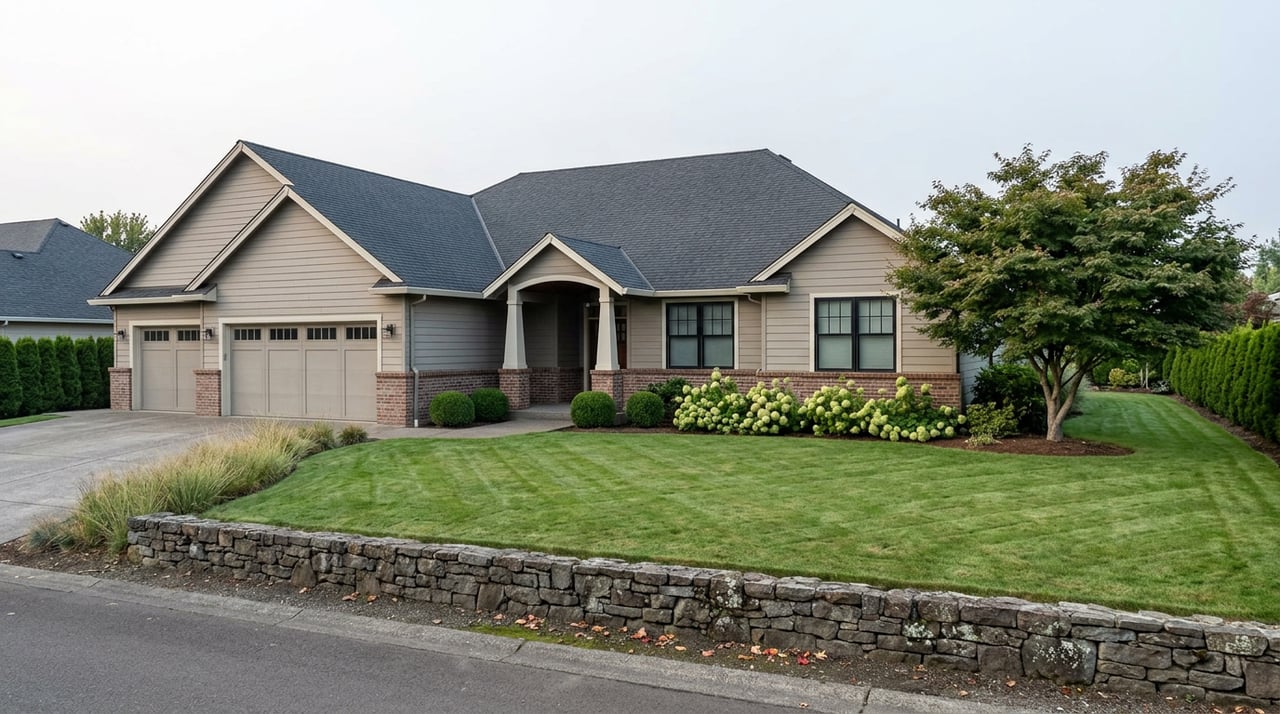
Livingston County Doesn't Require a Septic Inspection to Sell Your Hartland Home. Almost Every Lender Does.
September 24, 2026
September 24, 2026
Search "do I need a septic inspection to sell my house in Hartland Michigan" and you'll get two confident, contradictory answers. One set of results tells you Livingston County has a mandatory point-of-sale septic ordinance, evaluation required within 24 months of transfer, seller pays, county signs off. Another set tells you the opposite: no mandate, no county program, nothing on the books.
Both answers can't be right. Only one of them matches what Livingston County actually publishes.
The county's own Environmental Health page covers exactly one septic scenario: new construction and system replacement. It walks through permits, soil evaluations, and contractor-scheduled inspections during installation. Nowhere does it describe a program tied to selling an existing home. The page even states plainly that the county does not offer inspection services to homeowners or real estate agents. That's a strange thing to publish if a mandatory transfer inspection existed, since the county would need to explain how sellers get one.
A septic contractor that services properties across Livingston, Oakland, Washtenaw, and Wayne counties lists Livingston explicitly among the counties where it does not perform time-of-sale inspections under a county ordinance, because no such ordinance exists there to comply with. Compare that to Washtenaw County next door, which does run a documented time-of-sale program: a sanitary evaluation required at transfer, valid for twelve months, covering both septic and well if a well is present. That's a real mandate with real paperwork. Livingston's isn't the same animal, no matter how many generic guides file the two counties under the same bullet point.
So if you're selling a home in Hartland Township on a private septic system, here's the part that actually matters: the absence of a county mandate does not mean the inspection disappears from your closing timeline. It just changes who's asking for it and when.
Michigan has no statewide sanitary code. Each of the state's 45 local health departments writes its own rules, which is exactly why one search result says Livingston requires an evaluation and another says it doesn't. Both are describing a real pattern, just not Livingston's pattern.
What fills the gap in a county without a transfer ordinance is the lender. FHA and VA appraisers are trained to look for signs of well or septic trouble during their inspection, and if they see something, they can require further evaluation or repairs before the loan closes. Most conventional lenders follow a similar practical standard, even without a federal mandate behind it. So a Hartland seller without a county-ordered inspection often ends up ordering a private one anyway, not because Livingston County asked, but because the buyer's financing depends on it.
This is the part that catches sellers off guard. They hear "no county requirement" and assume that means "no inspection." Then a purchase agreement comes in with a septic inspection contingency written by the buyer's agent, or the appraiser flags standing water near the drain field, and suddenly there's a scramble to find a contractor with an open slot during the exact week they'd hoped to be packing boxes.
| Livingston County | Washtenaw County | |
|---|---|---|
| County-mandated inspection at sale | No published program | Yes, required at transfer |
| Validity window | Not applicable | 12 months |
| Who typically triggers an inspection | Buyer's lender or purchase agreement | County ordinance |
| Timing control | Negotiated between buyer and seller | Set by county process |
That last row is the real difference. In a county with a mandate, the inspection timeline is fixed by ordinance. In Livingston County, it's fixed by whatever the purchase agreement says and how fast a contractor can get on-site, which means it competes for a spot on your calendar with everything else happening between accepted offer and closing.
A standard septic evaluation in Michigan runs $300 to $600 for the inspection itself, with tank pumping, usually required as part of the process, adding another $250 to $450. If a contractor has to excavate to locate the tank or the distribution box because there's no as-built drawing on file, tack on another $100 to $300. Total cost for a full inspection with pumping typically lands between $450 and $900.
The inspector uncovers the tank, checks for cracks in the walls and baffles, and evaluates the inlet and outlet condition. Then they move to the distribution box, since a cracked or tilted D-box sends effluent unevenly to the drain field and can look like a bigger problem than it is. The drain field itself gets checked for standing water, soggy ground, or unusually lush grass, which are the classic signs of a system under strain.
D&J Septic Services, which covers Hartland Township along with the rest of Livingston, Oakland, Washtenaw, and Wayne counties, is one of the local providers that performs this kind of evaluation alongside routine tank cleaning. Having a name and a phone number ready before you list, rather than searching for one after an offer lands with a five-day inspection contingency, is the difference between a routine step and a scheduling emergency.
Hartland Township's housing stock skews recent. Roughly 60 percent of its homes were built in 1990 or later, split fairly evenly between the 1990s and 2000s, according to a local Hartland Township home inspection firm's breakdown of the township's approximately 6,000 housing units. About 78 percent is single-family detached.
That same firm notes something the township itself doesn't publish: a clean breakdown of which parcels sit on municipal water and sewer versus private well and septic. Both are common in this part of Livingston County, and the split has to be answered property by property rather than assumed from the neighborhood name. If you bought your Hartland home a decade or two ago and never had reason to think about your septic system, you may not even know for certain which category your parcel falls into until you pull the paperwork.
A house built in the mid-1990s is also at the point where the original septic system, if it's still the original, is old enough that a lender's appraiser is more likely to ask questions. Roofs, furnaces, and water heaters from that era tend to be due for replacement around now. Septic systems don't fail on the same predictable schedule, but three decades of use is enough that "when was this last pumped" becomes a fair question rather than a formality.
Here's where the mechanism actually bites. Livingston County's entry and mid-tier price bands, and Hartland's 48353 ZIP code specifically, tend to run tighter on inventory than the county's rural-estate segment. Homes in that band that are priced right and move-in ready go under contract faster than homes with visible deferred maintenance or an unresolved inspection item.
A septic inspection that surfaces late, after an offer is already in hand, is a slower and more expensive problem than the same inspection ordered before you list. If it comes back clean, you've lost nothing and gained a document you can hand to a buyer's lender without delay. If it surfaces an issue, you've bought yourself time to get a repair estimate and either fix it or price around it, instead of renegotiating under a closing deadline with a buyer who's already emotionally moved out of the deal.
This is the actual lesson buried under the county-versus-no-county confusion. The absence of a mandate doesn't lower the stakes. It just moves the decision about when to inspect from the county's calendar to yours, and a seller who treats that as optional rather than as a scheduling choice tends to find out the hard way.
Michigan Senate Bill 771 would establish statewide septic evaluation standards tied to system age and proximity to water, rather than to a property sale. It advanced out of Senate committee in June 2026 and is currently awaiting floor action. It is not law. If it eventually passes, it wouldn't replace county-level transfer ordinances directly, but it would mean far more of the state's roughly 1.3 million septic systems had been evaluated at some point in their life, which changes the baseline information available to a buyer regardless of which county they're in.
For a Hartland seller thinking about listing in the next year, that's a detail worth watching rather than a reason to wait. Nothing about your current transaction changes because a bill is sitting in committee.
Does this apply to buyers too, or just sellers? Buyers benefit from the same inspection, since it's usually their lender driving the requirement in the first place. A buyer purchasing a Hartland home with a private system should expect to see inspection results before closing, whether the seller ordered them proactively or the purchase agreement required them.
What if my septic system is decades old and was never permitted? Older systems that predate current permitting are typically treated as grandfathered as long as they're still functioning properly. The inspection is what determines "functioning properly." If it's failing, repair or replacement becomes part of the negotiation, not an automatic dealbreaker.
Is this different for a home on Hartland's lakes versus one that isn't? Lakefront and near-lake parcels often carry stricter local setback requirements between a drain field and the water, sometimes well beyond the state minimum. If your property sits close to a lake, it's worth confirming those setback rules with the township zoning office in addition to the septic evaluation itself.
If you're weighing when to list a Hartland home on a private well and septic system, or you're trying to figure out what your specific parcel actually requires before you put a sign in the yard, I'd rather walk through it with you now than have it surface as a surprise during a five-day inspection contingency. Sherry Cynowa has spent three decades helping Livingston County sellers get ahead of exactly this kind of detail. Let's Connect.
Stay up to date on the latest real estate trends.


Veteran Michigan Real Estate Agent since 1994, Sherry is “short in stature and tall on results,” bringing local expertise and a passion for helping you achieve your real estate goals.